September 26, 2011

Back to Climbing

We had but one nice day this weekend, so Ava and I decided climb the famous/infamous Improbable Traverse on Guye Peak.  Guye (pronounced "guy", but I like to say "goo-yay") is situated immediately adjacent to I-90 at the top of Snoqualmie Pass.  As such, I had been eyeing this route for pretty much as long as I've lived in Seattle.

Guye is notoriously chossy with the namesake traverse being of much higher quality rock than the rest of the route.  Nonetheless, the easy access and striking nature of the face make the Improbable Traverse a much sought after and frequently climbed route.

Guye Peak and the Improbable Traverse Route
For the most part, the route follows a series of zigzagging ledges.  While on the ledges, most of the route is class 3/4 with a few short steps of easy 5th class climbing.

After ascending the talus field at the bottom of the face, a short dirty gully leads to a large left leaning ledge.  We followed this ledge most of the way across before roping up and climbing two short, easy 5th class pitches up and right to Lunch Ledge, the start of the traverse that is so improbable looking.  Shortly before reaching lunch ledge, Ava dropped a climbing shoe.  Luckily it stopped, and the party behind us was able to retrieve it and bring it up to us.

The traverse is the one difficult section as it takes you from one left-leaning ledge, across a nearly vertical face, to another left-leaning ledge.  I led this part and was pleasantly surprised at the amount of pro I was able to place in the reasonably solid rock.  I set a belay about 3/4 of the way across the traverse and ended up leading it in two short pitches.  There were some really fun balancy moves in a couple places to skirt across the steep face with great exposure below.  After the traverse, a large choss-ledge scramble to the left led to more choss-ledge scrambling . . . right, left, right, left.  Near the top, we came to one final pitch of climbing.  We roped up and Ava took the lead, ascending rock that didn't suck for about 50 meters until an easy scramble to the top revealed itself.

Ava had been to the top previously via a different route, so she knew how to attack the less-than-straightforward descent.  I can see how friends of mine couldn't figure it out in the dark and ended up spending the night up there.  There are basically three summits.  We topped out on the south summit and a nice trail leads down from the north summit.  To get from the south to the north summit, you have to scramble to the middle summit, descend a short way toward the north summit, rappel from a tree into a steep gully (about 30 meters), and ascend back out of the gully directly toward the north summit.

We descended the steep but obvious trail down to the Guye-Snoqualmie saddle and then down to the Alpental parking lot before walking the roads back to where we started at the base of the talus field.  I thought this was a super fun day out despite the substandard rock quality that exists for most of the route.  There's definitely something to be said for alpine climbing next to the freeway with almost no approach.

September 19, 2011

Elk Hunting, Phase II

My second trip out for the final five days of the season was less eventful, but still plenty exciting.  It turns out the elk are smart and know that they are being hunted and that bugling gives away their location.  After a few days of the season they virtually stopped communicating, rendering them much more difficult to find.  The weather changed dramatically from my previous trip, with highs dropping from about 80 to 60 degrees F.

Some mornings I would hear bulls bugling before the sun came up, followed by silence as soon as it became the least bit light.  Most evenings I would see either a lone cow, or a cow with a calf or two feeding shortly before dark.  I made hurried stalks on three of these cows on separate occasions, with swirling winds putting an end to two of these attempts and a location miscalculation ending the other.  I also spooked up a small heard from about 30 yards, watching a cow ass quickly appear and then disappear while listening to the thunder of hooves gradually growing fainter.  Kris joined me for the last two days, bringing rainy, miserable weather with him.

The way things work in Washington, we still have another chance to harvest an elk during the late archery season, which lasts from November 23 until December 8.  I'm sure I'll be out again then, trying to get luck and skill to align for a fruitful (meatful?) harvest.  Only next time I'll have a bit more skill and require a bit less luck.

September 12, 2011

Elk Hunting, Phase I

I returned last night from 4.5 days of chasing elk around in the woods east of Mt. Rainier, primarily in the Norse Peak Wilderness.  This marked the start of my second year bow hunting for elk, and my first year hunting without the guidance of the accomplished Jake Adams.  As it turns out, the area I'm hunting in Washington is so dramatically different than that which Jake and I hunted last year, I'm having to learn a lot by trial and error.

My scouting efforts paid off!  I saw and/or heard elk every day.  The one similar aspect to my hunting experience with Jake in NE Oregon is that the elk are extremely difficult to get close enough to to spear with an arrow.  I chased many bugles over the past few days, putting lots of off-trail miles on my hiking boots.  I failed to draw a bull tag, but I have a license to shoot a cow or spike bull.  Here is an overly detailed chronological replay.

Day 1:  I hiked into the wilderness in the afternoon to a location where I had seen a smaller 6-point bull on a scouting trip.  Glassing into the basin to the west (where I had seen the bull a few weeks earlier) that evening turned up nothing.  Shortly before dark, I moved locations to look into the valley to the east.  As soon as I put my binoculars to my eyes, I saw a cow elk about 700 yards away.  With only 20 minutes of daylight left, I didn't have time to pursue them so I stayed there and watched with my binoculars.  The elk were in pretty dense trees with occasional openings, so I would occasionally see one or two elk (all cows) but I heard bugling so I knew there was a bull with them.  As the light was fading, the bull walked into the open.  It was huge, every bit as big to my untrained eye as the 350 and 360+ bulls that I saw with Jake.  After watching him bugle in my binoculars, I decided to try my bugle out which I had previously been hesitant to use due to inexperience.  I bugled.  To my surprise, I convinced the big, mature bull that I was another elk and he bugled back, warning me to stay away from his cows.

Classic Antler Rub - I saw a ton of these, many of them very fresh

Day 2:  In the morning I chased a bull that was bugling like crazy (screaming his head off as Jake would say).  It was interesting trying to sneak up on a group of animals that you cannot see and can only hear.  My previous hunting experience utilized almost all eyes, this new experience is 100 percent ears until you get inside about 80 yards.  Anyway, I closed the gap to about a hundred yards.  I never saw them, but heard them spook and run away shortly before I got within eyesight.  That evening I heard almost nothing.  On my way back to my bivy site in the dark, I spooked up another heard that was apparently about 80 yards below my camp.  I went to bed that night humbled and reminded of how difficult it is to sneak up on an animal who make a living (literally) by not letting you sneak up on it.

Day 3:  With one day of "ear" hunting under my belt, I was beginning to figure things out.  Early in the morning I began hearing bugles.  I followed the sound of the nearest one, down the hill for about 700 yards before hearing their footsteps as they broke sticks.  I moved very slowly and quietly toward the sound, and then I saw fur through the trees about 60 yards away.  I could tell the heard was large by the sounds coming from all around me, sounds including the bull bugling from somewhere very close by.  I hoped that some of the elk would pass by closer to me than the first couple that I saw.  While watching the elk I could see 60 yards off, I took about one step every 30 seconds to avoid making too much noise while walking on dry sticks.  Then I noticed a cow elk 30 yards away, staring right at me.  I held motionless until my camouflage convinced her that I was nothing to fear.  As she looked away, I drew my bow.  I could only see part of her face and a leg at this point due to the trees.  I had limited shooting alleys, but if she took about three steps I'd have a broadside shot at her lungs.  She took one step.  Now I could see her head and neck.  I held my 30 yard sight pin on the center of her neck, wondering if I should take the ethically questionable shot.  I decided not to.  Soon I could no longer hold the draw on my bow, and had to let it down.  This made the cow nervous and it trotted off, back into the heart of the heard which was out of view.  Excited but composed, I was planning to wait for the cow to be out of site before I made another stalk and attempt to get close again.  Just then, I heard another elk coming through the woods.  At about 50 yards I spotted it, a young 6-point satellite bull heading right at me.  A large tree 10 yards from me prevented me from seeing him well, but I could tell he was heading directly at me.  Again I went to full draw, primarily for the practice of drawing without spooking the animal.  I didn't know which side of the tree he would go, but either way he'd come real close to me.  As he approached the tree he went to my left and stopped.  I had a clear broadside shot from about 18 yards . . . if only I had drawn that bull tag!  After he cleared out, I could no longer hear the heard and figured I spooked them.  I got out my cow call and mewed to see if the lead bull would respond.  Seconds later, the lead bull bellowed from was seemed to be about 70 yards up the hill from me.  I slowly and as quietly as possible took a few steps in that direction before hearing the heard stampede off like so many times before.  With a little luck, maybe this whole elk hunting with a bow thing is possible!  While producing no meat for my freezer, this experience helped me gain confidence in my bugle, mew, camo, and stalking abilities.

Trying to look like a hunter

That evening, hunted my way back down and out of the wilderness to meet up with Kris, who would be hunting with me for the weekend.  I chased a bugle early in the evening, spooking the heard before I could see them.  I soon picked up another bugle on the other side of the steep ridge as I was descending.  I followed it, spooking a deer in the process.  I eventually found myself looking over the edge of a 50 yard cliff down on top of a lone bull, about the size of the satellite bull I saw that morning.  It was mildly upsetting that I descended such a long steep hill only to be duped by the bull that had no cows.  I decided to practice my calling with the bull as he wandered around below me.  I bugled, and he bugled back.  I cow called, and he responded with a chuckle, typical of the final notes of a textbook bugle.  I did this multiple times before he wandered off.  While briskly hiking back to car so as not to do too much off-trail hiking in the dark, I looked downhill to my right and saw a cow elk standing broadside at about 90 yards, staring at me.  I held motionless, and soon she lost interest and resumed feeding.  One second later, she bolted as the wind was blowing down hill, straight into her and it had taking several seconds for my now pungent odors to reach her highly sensitive nostrils.

Day 4:  I met up with Kris (aka: Haskins the Deadly) Friday night.  Kris had never been hunting before and now had the privilege of being taught by a novice (at best).  I decided to take him hunting in an area of National Forest that looked promising from a scouting trip.  Early in the morning, we heard a bugle less than 5 minutes after we finished breakfast and started hunting.  We chased it down the hill, and each time it bugled it sounded about twice as far away as before.  We figured it was running away from us as the wind was not in our favor (we had hoped the elk we would find that day wouldn't be directly below us).  We neither heard nor saw any other elk that day, which was disappointing because I really wanted Kris to have an exciting first experience.  Afterwards, it was pretty clear that the place we chose to hunt was a good place except for the fact that it had been hunted real hard during the first few days of the season and all the elk in that area had been pushed out.

Kris, looking rather hunteresque himself

Day 5:  Determined to get into some elk, we went to a different spot that we thought would have been less heavily hunted.  We heard multiple bugles in the morning.  The first one we chased ended up spooking at about 100 yards because we got closer to them faster than we anticipated, and failed to enter super stealth mode soon enough.  Not much later, we picked up a different bugle.  We followed it up the hill, determine not  to make the same mistake again.  Unfortunately, it was getting late enough that the elk stopped "talking" and were making their way up the hill to bed down for the heat of the day.  We followed their tracks for quite a while before stopping to have a conversation about how the best case scenario would be that we follow them far enough up the hill that we spook them out of their beds before we ever see them.  After deciding to go up just a little further, we didn't take 10 steps before the forest erupted with the sound of scattering elk.  We never saw them, but went up to where the sound came from and realized we had gotten within about 30 yards of some of them before they ran off.

That evening we moved yet again to a new spot, ending up on the opposite side of the wilderness that I had been hunting a few days earlier.  We heard no bugling, which didn't make sense to us given all that we had learned.  I knew there should be elk in that area, and I desperately wanted Kris to at least see some fur before we went home that night.  About an hour into the evening hunt we were quietly traversing a valley slope, slowly making our way back to where we parked the truck.  Suddenly, I saw and heard an elk about 120 yards in front of us, heading straight down the slope.  We kept watching that area, and eventually saw several more elk head down through the same viewing window through the trees.  We tried to back off, parallel the elk, and move back in below them so that they would eventually walk right into us.  We either spooked them at some point or they randomly took a route that avoided our arrows.  Either way, we never saw them again.

To summarize this now superbly long blog post, I had a fantastic time and cannot believe how much I learned.  I chased elk every day, got really close once and managed to accomplish my goals of getting Kris close to elk and getting his eyes on some fur.  Please pardon my concluding baseball analogy.

1st Base: Hiking through beautiful forest (arguably fun in its own right)
2nd Base: Hiking through beautiful forest while chasing elk
3rd Base: Hiking through beautiful forest while chasing elk and getting really close to them
Home Run: Hiking through beautiful forest while chasing elk, getting really close to them, and ending up with meat in the freezer

I hit a triple this trip, and I've got my fingers crossed for a home run next weekend.

Closing Trundle

August 14, 2011

Scouting Report

I just got back from my first elk scouting trip, and things were promising.  On a two-day backpacking trip, Ava and I saw 7 deer, 9 elk, and an incredible amount of sign.  I was caught a little off guard by how dense the trees were in the area we went.  I'd never been there before, but it was on the east side of the Cascade divide and in Oregon that means thin stands of pine with little understory.  This made glassing with binoculars difficult, so we largely resorted to sneaking around in the woods and peering into meadows whenever the trees opened up a bit.

Oh, deer!
The one mature bull we saw (and one of the few open meadows)

To summarize my thoughts after this first scouting trip, I was happy with the amount of animals and sign in the area, but at the same time reminded of how difficult it will be to get close enough to stick one with an arrow.  I'm not sure if we'll hunt this exact area, but it's a decent option if Kris and I don't find anything we like better.

. . . and the wildflowers were in full bloom
I ordered a new camera, so hopefully my next scouting trip will result in some better wildlife photography!

August 12, 2011

Keith's Bachelor Party

The theme for my friends' bachelor parties is an excellent one: go on super fun outdoorsy adventures with a now geographically dispersed group of close friends (mostly from Oregon State).  Since this was Keith's celebration, we opted for rafting the Main Tuolumne River near Yosemite National Park.

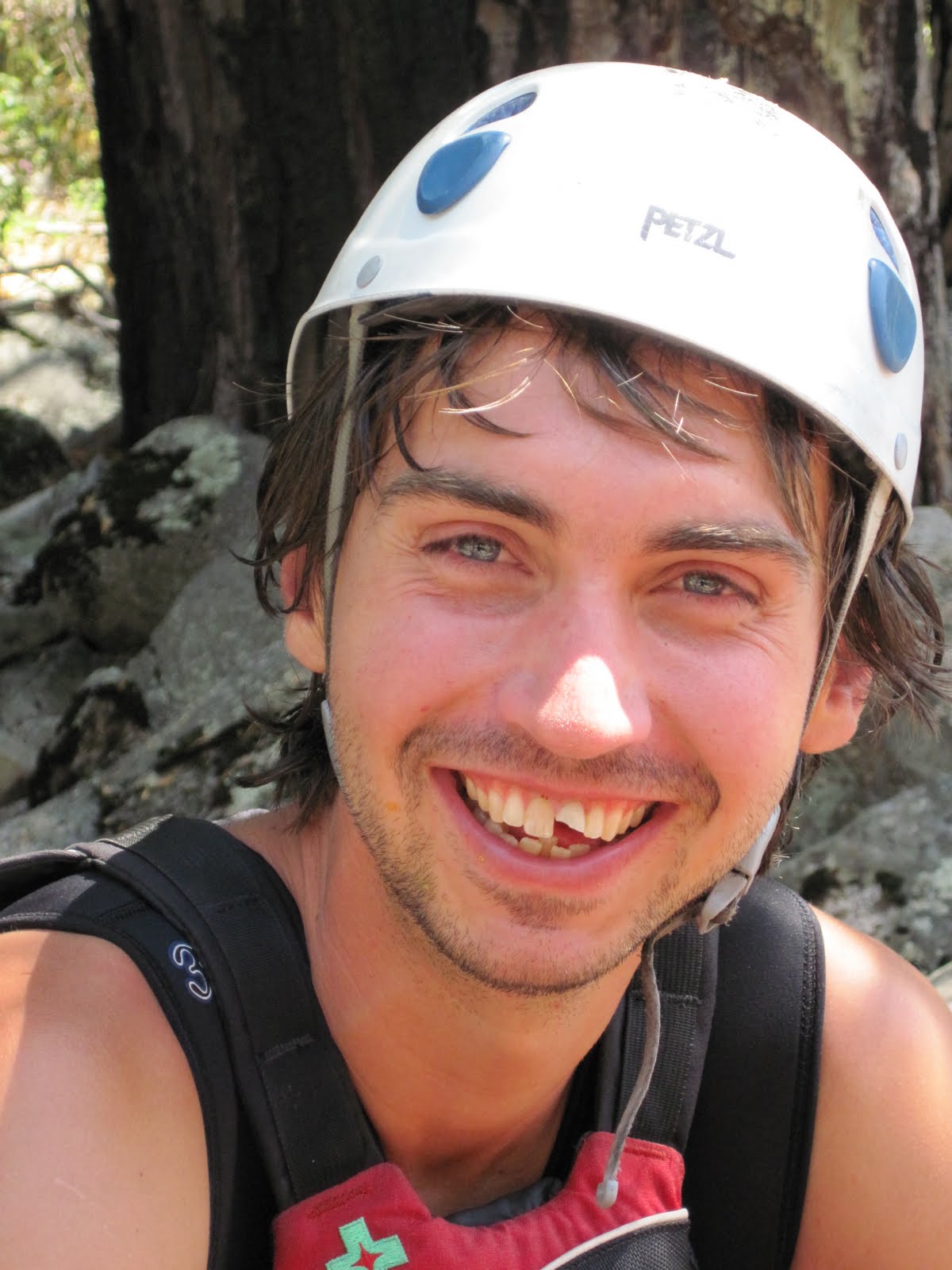
Five brave participants started a day early and boated Lower Cherry Creek, a burly 5th class run that ends on the Main Tuolumne.  Phil kayaked this while Keith orchestrated a paddle boat with Garrett, Graham, and Graham.  Since I wasn't on this trip, it's all heresy, but evidence suggests that the following story is true.  As the boat went over the drop on the very first rapid on Cherry Creek, the back end kicked a little more than expected.  As the paddle guide, Keith was in the back.  He was bucked forward violently enough that his face hit a paddle, breaking off the lower half of one of his front teeth.


The rest of the Cherry Creek run was not without excitement.  There were a few swimmers, a temporarily wrapped boat, and more faces hitting paddles.  In the end, they all made it down (safely?) to the Main Tuolumne put in just below Lumsden Falls.

Lewis Falls (make sure to watch Keith in the back of the boat toward the end of this one)

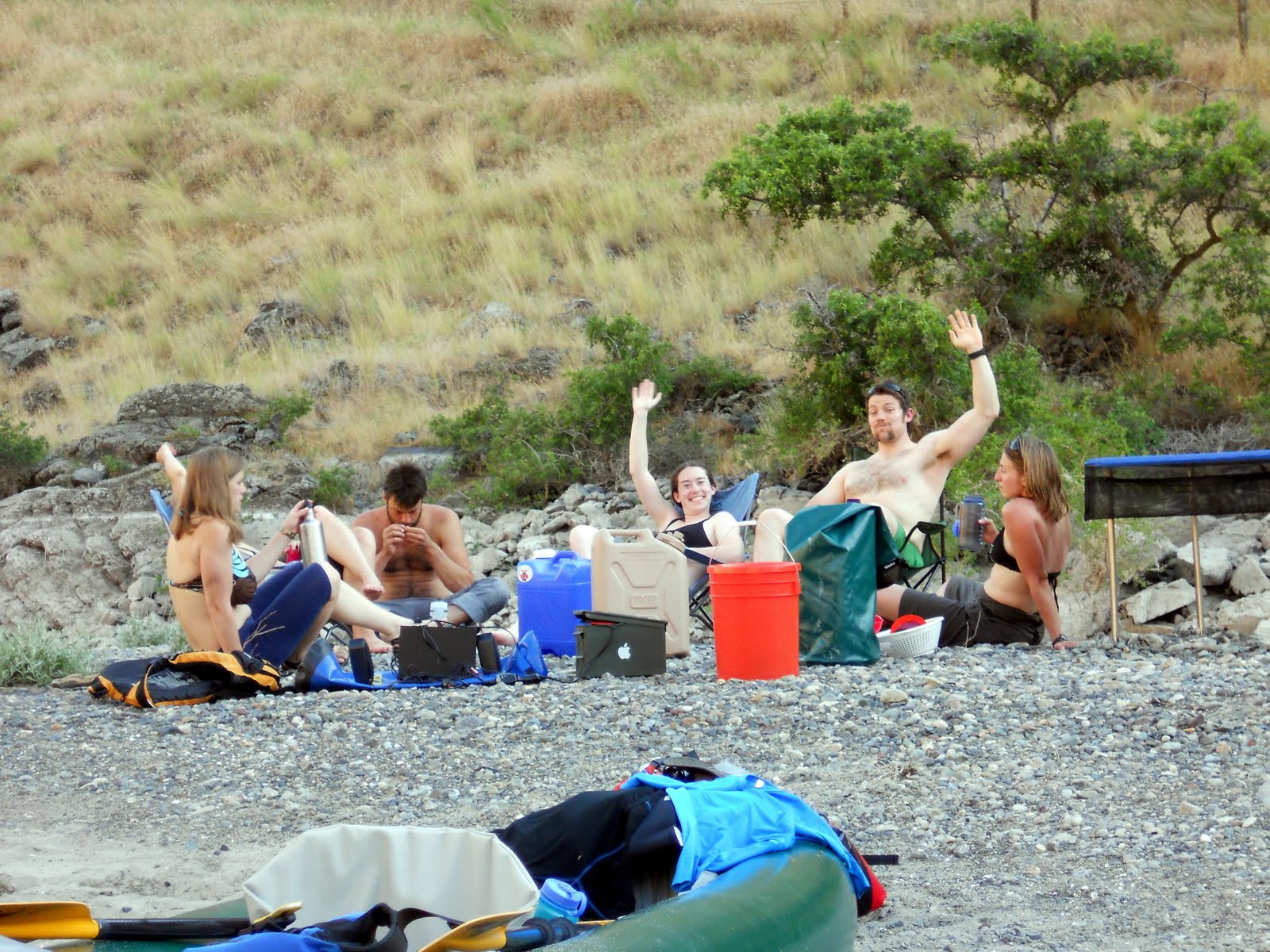
Meanwhile, a group of five from the Pacific Northwest was driving south, packed into my Honda Fit.  To be fair, Dane and I drove from Seattle to Corvallis where we spent Thursday night before adding Jason and Deverton to the car and driving to Sacramento, where we added Ian.  Three hours after picking up Ian, we arrived at Buck Meadows.  From Buck Meadows, it was a 1 hour hike down into a big canyon to the put-in for the Main Tuolumne run.  Normally one can drive to this point, but the winter wreaked havoc on the road, rendering it impassable.  We met up with the rest of the group that night, including Greg who ran shuttle for the Cherry Creek group, and 11 of us proceeded to drink 2.75 bottles of whiskey (and several beers to ensure that we didn't get dehydrated).

Over the following two days, we rafted about 20 miles of river with lots of Class 4 rapids and one class 5-.  I rowed our gear boat most of the way and found the water to be a perfect challenge for me: a great next step after rowing a couple of big water rivers.  I botched a couple lines, but styled many more.

Clavey Falls, the Class V-
We camped across the river, and above the class 5-, from a tree that looked to be ripe for a rope swing.  A large portion of our group ferried across the river to set up a swing with the throw rope and managed to get the bag stuck in the tree.  After failing to get it back down, they proceeded to swing on it, never knowing if it pop.  When the swinging fun was over, they realized they still needed to get it down.  Various attempts were made, including Graham M. putting on his wet suit in attempt to climb the tree like a bear (and he actually looked like a black bear).  Eventually, the successful attempt was made by Phil, who ascended the rope via prussiks attached to his rescue PFD.  All the while, Dane and I were drinking maté and being entertained from across the river.

That night, a couple of female raft guides came over from their camp across the river to entertain us in a very PG way.

Yes, that's a bowling ball and chain (we figured Keith could use some practice)
Late on the last day we found a great jumping rock!
Great trip, good times, but it's sad to be loosing Keith to the married world in three weeks time.

July 26, 2011

Corn Harvest: Shuking on Shuksan

After giving ourselves a day of rest following the arduous rafting trip, Ava and I decided ski season wasn't over and pointed the car north towards Mt. Shuksan.  We hoped to find remnants of epic spring (summer?) corn snow, and that's exactly what we found.

We approached to about 4,600 feet on the Sulfide Glacier route on Saturday evening, which put us at the lower extent of the good skiing.  We had just enough time to cook dinner and make water before going to bed at 8pm.

We got a 0330 start on Sunday morning and made good time skinning up the route.  We stopped for a hearty breakfast of cheese sandwich at the site of our camp three weeks earlier.

0430 breakfast at the site of our camp on our previous attempt
 Shortly after breakfast, as we continued on our way, we were fortunate to watch a shuking awesome sunrise that seemed to last for an hour.  For once, it seemed that Earl, the God of Weather, would smile upon us.

Sulfide Glacier and the Summit Pyramid at Sunrise
 We roped up upon reaching the glacier, which hardly seemed necessary given the complete lack of visible crevasses along the west edge of the glacier.  The route, as anticipated, was very mellow allowing us to ski all the way from camp to the base of the summit pyramid.

Ava skinning up the Sulfide
The upper 400ish feet, known as the summit pyramid, is a steep block of rock and snow.  The easiest way up is via a 45 degree couloir on the south side.  By any other route on Shuksan, the summit pyramid is the last obstacle to reaching the summit.  Via the Sulfide Glacier route, it is the only one.  Staring at this couloir for a few hours while skiing toward it filled me with anticipation.

Two groups started before us, both of which camped higher on the mountain.  We passed the last of them as we reached the summit pyramid, so we were fortunate to be the first to the top that day and not have people kicking rocks and snow down on top of us as we ascended.  We were somewhat less fortunate on the way down.

Looking down, partway up the pyramid (Ava's down there somewhere below my boot and looks a little rockish)
 The final 50 feet required that we get on a rocky ridge as the snow had melted out.  This was exciting in ski boots with a complete lack of rock pro, but the several rappel anchors that we passed and a clever use of an ice axe jammed in a crack was sufficient.  We reached the 9,131 foot summit at 0830 and had it to ourselves for a few minutes.

Mt. Baker from the summit of Mt. Shuksan (the views were spectacular all the way up, but those from the top were hard to beat)
Hooray for summit shots! (not inspired by Craig W.)
We spent some time at the top and took our time down climbing the pyramid.  By the time we reached our skis at the base of it the snow had softened perfectly.  Turns out 1030 at 8,700 feet on Mt. Shuksan was equivalent to Corn O'Clock that day.

Oh, hey.  It's wild corn.
The first 1,500 vertical feet of skiing was perfect, smooth corn snow.  After that, the ride got a little bumpier as sun cups developed and the snow got softer and stickier.  Even so, the skiing was super fun!  I felt sorry for most everyone else on the mountain that day, as they did not have skis and would have to slog down several miles of perfectly good corn snow.

Weeeeee!!!
We made it back to the tent around 1300 and spent some time there eating and drinking before packing up and hiking the last few miles down to the car.

The Sulfide Glacier route has a reputation for a being a boring slog.  Without skis, I suppose this is mostly deserved.  However, the way we did it made for a fantastic ski mountaineering adventure involving a pleasant ski approach to the summit pyramid, glacier travel, 400 feet of fun and moderately technical terrain at the top, 4,000+ vertical feet of skiing, and beautiful weather all day long.  Shukcess!

Floatin' the Snake

Several months ago Jake drew a permit to raft the Snake River in Hell's Canyon.  Over the ensuing months he put together a great crew of 12 brave people willing to tackle the mild whitewater and endure the almost tropical weather while lazing around drinking beer.  The crew included many familiar faces from previous posts, including Molly and Phil, Kris and Mel, Jake and Al, and Ava and me among others.

Over the course of six days we floated about 80 miles from the Hell's Canyon Dam to Heller Bar.  With flows hovering around 20,000 cfs, the river was at its prime.

We had many key players with important roles.  Molly put together an amazing menu and grocery shopping list.  Al was instrumental in acquiring said food, knowing where things were packed in the boat, and generally making sure people didn't starve.  Phil manhandled the task of providing a music system as well as being our safety kayaker.  Jake performed countless necessary tasks including obtaining the permit and acquiring floating vessels and gear.  Most everyone else helped out by cooking and consuming all the edible and drinkable things we brought.  I lucked out by having my primary responsibility be to rig, row, and derig the gear boat every day.

We encountered the two biggest rapids of the trip on the first day.  After scouting the first one (Wild Sheep), our procession of vessels (kayak, 16' gear boat, kataraft, inflatable kayak (IK), and paddle boat) all went down in fine style.  Even the IK captained by Ava and Al managed to make it most of the way down before flipping.  During the scout, I picked out the biggest wave and managed to hit it straight on.  Not surprisingly, it was bigger than it looked from the bank and felt like we crashed the gear boat into a 12-foot wall of water - good fun, no carnage.

Boat ahead of us hitting the big wave in Wild Sheep Rapids
The second big rapid was more of a shitshow.  During the scout, we watched a couple of other rafts go down and it looked pretty straight forward.  Then we watched another raft go down without anyone in it.  After a triple take, I could no longer ignore the fact that it was my gear boat.  Apparently the half-assed job of tying it up was insufficient to defend against the wake created by the passing jet boats.  Phil and I ran down the trail back to our boats.  He hopped in his kayak and I on the kataraft as we raced after the gear boat which flipped upon entering Granite Rapid.  About a mile downstream we caught up with it.  Phil tied it to the kat and I struggled to drag the up-side-down beast to an eddy.  After it was all said and done, we only lost a bottle of rum and a table.

Camp life - really roughing it
Bumble Bee Ava
After that, everything went much smoother.  The remaining days were filled with floating, eating, drinking, swimming, and generally just having a grand and relaxing time, often in costume.  We saw lots of Oregon bighorn sheep, several osprey, a few deer and some turkeys.  Kris tried kayaking for the first time and discovered that learning to roll would be a good idea before he tries it again.

Thirsty Ram
This trip served only to increase my desire to own a gear boat and partake in trips like this on a regular basis. Boating is a great change of pace from the more physical nature of backpacking, climbing, and mountaineering.  I'll just have to be careful no to get fat and lazy if I start doing this more frequently.

Mel and Ava working hard to get the boat down river

July 10, 2011

Oops, I Failed Again

After failing to climb at Exfoliation Dome two weekends ago and failing to climb/ski Mt. Shuksan last weekend, I promptly failed to climb Mt. Rainier this weekend.  Oddly enough, each of these trips turned out to be quite enjoyable despite the fail trend.  I won't know what to do with myself if I actually manage to climb something one of these days.  I'll elaborate on my most recent failure since it is very fresh in my mind.

Dane and I have been planning to attempt a climb of Liberty Ridge on Mt. Rainier for a while, and we finally found a weekend where we were both free and the weather appeared like it was going to cooperate.  We left Seattle on Saturday morning with plans of approaching to Thumb Rock (10,800') about 1/3 of the way up the ridge that day and completing the climb on Sunday.  We both fully recognized the ambitious nature of this plan upon its inception.

Dane on St. Elmo's Pass
Beginning at the White River Campground at 7:45am Saturday, we made good time up to the Inter Glacier, over St. Elmo's Pass, across the Winthrop Glacier, and over to Curtis Ridge, where we arrived at 12:15pm.  From here our daily route plan entailed crossing the Carbon Glacier to the base of Liberty Ridge, and ascending Liberty Ridge for 1,800 feet to Thumb Rock.

The North Face of Mt. Rainier and the Carbon Glacier - Liberty Ridge cuts straight down the middle
From our vantage point on Curtis Ridge, a typical camping spot for a 3-day ascent, we could see that the lower part of the ridge was very melted out.  We ruled out trying to scramble up steep, rotten rock, which made the most reasonable option to ascend the snow slopes on the climber's right side of the ridge directly to Thumb Rock.  With heavy rockfall guarding the base of the ridge during the heat of the day, we decided to wait until early the following day and alter our plans to summit from lower down.

Close up of Liberty Ridge, all 5,000 vertical feet of it
Before going to bed that night, we heard the Liberty Cap glacier calve twice.  This is essentially an 500-foot wall of ice breaking off in pieces and cascading down several thousand feet to the Carbon Glacier.  The route we would need to take to reach the snow slope leading to Thumb Rock, as we both knew all too well, would cause us to travel precariously close to the run-out zone of said ice fall.  We decided to get up early and give it a go.

We started crossing the Carbon Glacier at 12:45am.  About two hours later, aided by footprints from another party, we reached the area near the base of the snow slope we were aiming for.  As we predicted, large crevasses barred access from the glacier to the ridge.  The only option was for us to traverse far to the right, around the crevasse and over obvious debris from the glacier calving activities observed the previous night.  We were already slightly exposed to this danger and moving right would just make it worse.  The odds of the glacier calving while we were under it were low, but the consequences were of the highest degree.  Not wanting to spend time deliberating while exposed to this threat, Dane, who was in the lead at that point, made an executive to decision to initiate a hasty retreat.

At 3:30am we were back at our previous campsite, having had a nice midnight jaunt across the Carbon Glacier and back.  I don't think I've ever been on a large glacier in the middle of the night before, and found this experience quite fun/eerie/surreal.  We considered traversing back to the Emmons Glacier and summiting via this easier and less committing route, but ultimately decided that this would make for a very long day with disproportionate rewards.  So we re-set-up camp and went back to bed.  Starting about 9am we retraced our route from the previous day back to the trailhead.

Despite reaching a high point a vertical mile below the summit, we still obtained fantastic views, got lots of exercise (ascended about 5,000 vertical feet with full packs and covered about 14 miles), and came back safely.  It sure beat watching TV all weekend.  I'm excited to try this again next season, earlier in the year when the lower ridge is snow covered and the objective hazards significantly reduced.

June 23, 2011

Still in the Game

I spent the previous two weeks teaching a rock climbing course in Leavenworth, WA!  It was great being able to continue working for The NOLS even though I have a full time engineering job.  I totally felt like I was getting paid to take a vacation.  Nothing super exciting to report from the course; students were great, weather was almost perfect.  Things went so smoothly it was actually pretty uneventful.  I did get to learn the climbing out there much better, so next time I go back it won't seem like such a mystery.  A highlight for me was climbing Condorphamine Addiction, a 7-pitch 5.10b sport climb.  I highly recommend it due to it's well-bolted nature and varied climbing (steeper face, lots of slab, and even an occasional crack).  Most of the climbing is in the 5.8-5.9 range, with a couple of harder moves that are both on well-bolted slabby sections.

The weather here is finally starting to get better, so hopefully I'll have some first class adventuring to report soon!

May 25, 2011

Leavenworth Classic

Last weekend Ava held the annual spring campout for the UW Climbing Club.  She enticed me to tag along by proposing that we climb Outer Space on the Snow Creek Wall on Saturday (followed by cragging with the big group on Sunday).  After the 1.5 hour approach, we geared up and were just about ready to begin the first pitch when it started to drizzle.  We proceeded to spend the next hour in the presence of goats trying to reach a mutual decision on if we should climb or not.  Meanwhile, the overcast skies stopped drizzling but remained menacing.  We finally decided to go for it.

Snow Creek Wall in the rain: Outer Space begins near the lower right of this photo and finishes in the top center.

Goat intently watching the party in front of us
We got off to a bad start as I somehow managed to turn Pitch 1 (easy 5th class) into a 5.10+ wanderfest.  Pitch 2 (easy 5th class traverse) went much more smoothly, and then the business end of the climb began.  Pitch 3 (the traverse pitch, and my favorite pitch of the climb) involved interesting and sustained 5.8 - 5.9 moves in an exposed and well-protected environment.  Pitch 4 (the dihedral pitch) takes you left from the top of Pitch 3 over to the bottom of the famous 300' hand crack.  This was an enjoyable pitch in its own right, yet overshadowed by what lie ahead.  A tricky start to Pitch 5 (the money pitch) finds you at the beginning of a splitter hand crack on an 80 degree face littered with chicken heads.  Simply enjoyable climbing in a sporadic and light drizzle.

Ava working her way up the money pitch
Pitch 6 (the final pitch) again starts with some tricky moves.  It's supposedly 5.9, but I found this to be the most difficult part of the climb and I'm not ashamed to admit that I pulled on a piece of gear to get through an obnoxiously thin section 15 feet up from the belay.  After that it was a crack and chicken head romp for 65 meters to the top.  As I was belaying Ava up the final pitch, the drizzle returned and intensified.  As she reached the top, the drizzle turned to rain.  Perfect timing?  I'd say it could have been worse, but the fact that we now had to descend the 4th class descent route in the rain was less than desirable.  The following video summarizes the difficulties of our descent.


We eventually made it down safely and had a fantastic day rock climbing in the rain.  We did some cragging at Playground Point the following day before heading back to the cluster of traffic known as Seattle.